


Shandong Xinmandi International Trade Co., Ltd., has been providing professional OEM and ODM customization services to global clients for decades. Our metal stamping department is able to provide high-quality, on-time delivery parts at competitive prices, manufactured strictly according to specifications, and can also customize relevant metal stamping according to customers' actual needs, meeting their diverse needs.
Our experience
Our team has many years of experience in metal stamping projects and has completed thousands of custom jobs ranging from simple parts to complex systems.
Advanced technology
Technological innovation is our competitive advantage and we constantly keep up with emerging industry technologies and trends, enabling our customers to benefit from cutting-edge product development.
Excellent customer service
Our excellent customer service team ensures that all customers' needs are met and provides tailor-made solutions and quick responses to any issues that arise.
High quality assurance
We follow the international quality management system to ensure the quality of every link to help customers improve product competitiveness.
Metal Stamping Process is a process in which molds are used to pressurize metal pieces into desired shapes and sizes through pressure. Stamping can quickly and efficiently process an array of parts for mass production purposes; making this technique ideal for automotive, home appliances, electronics, construction projects, daily necessities or mechanical components industries.
Case
Metal Door Lock
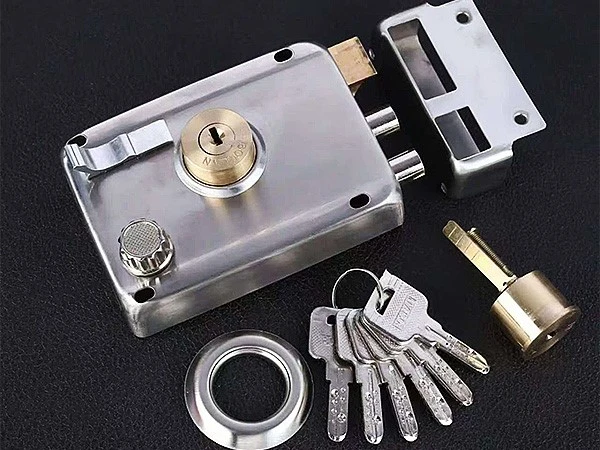
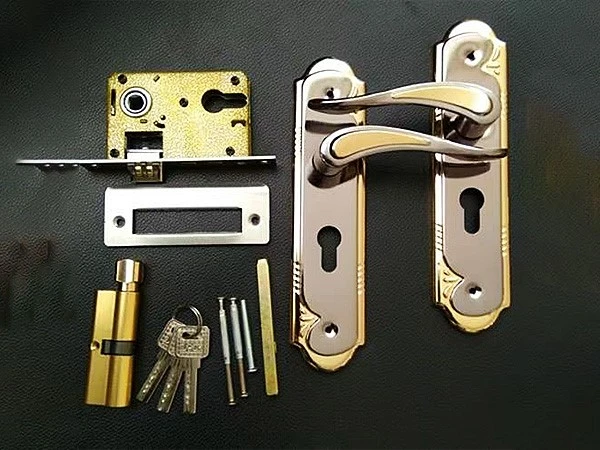
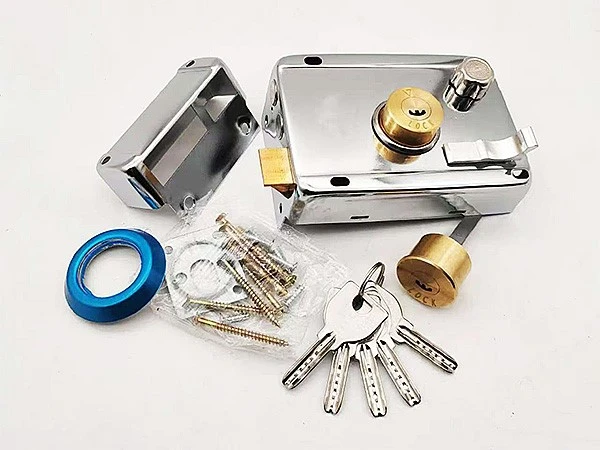
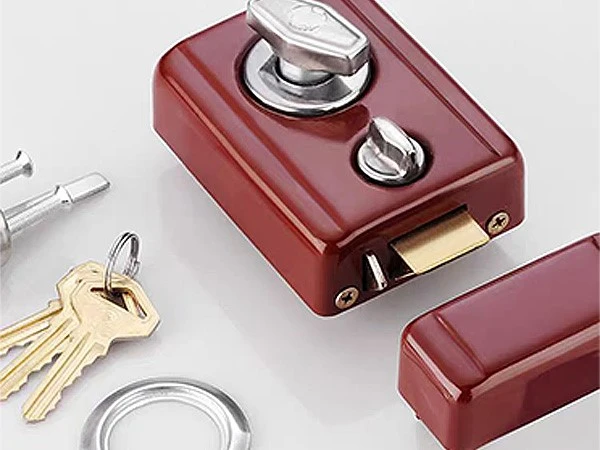

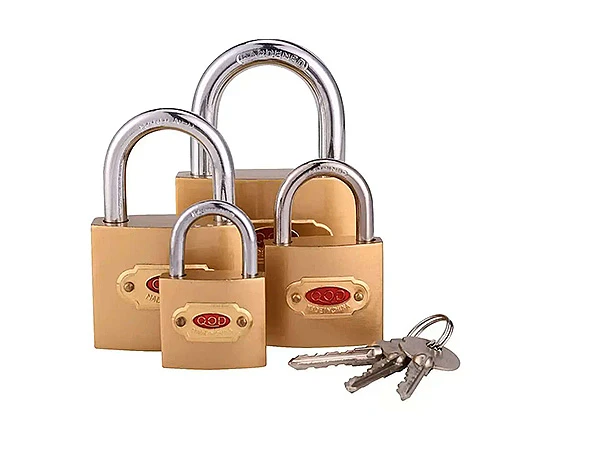
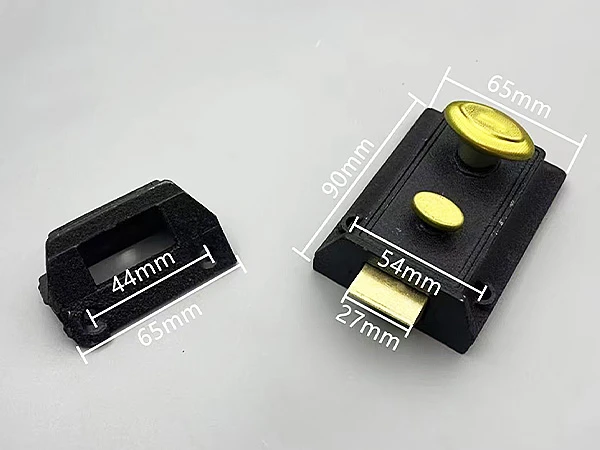
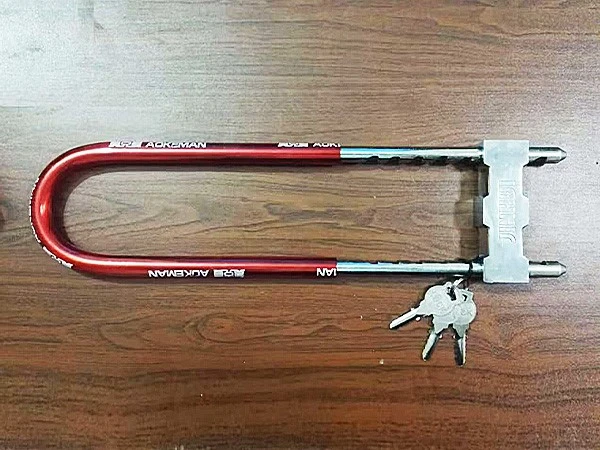
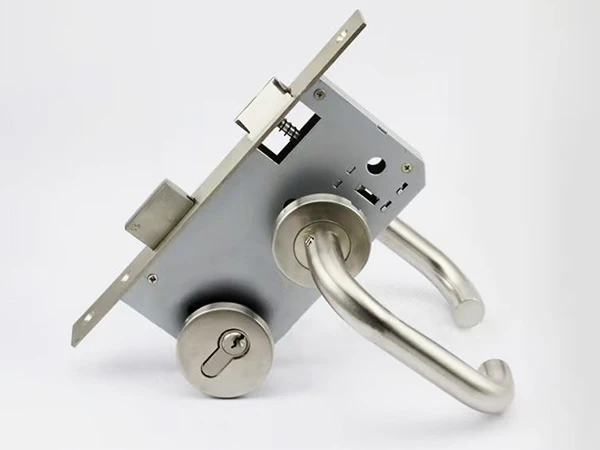
In large-scale production, metal stamping can efficiently and precisely manufacture metal components in door locks, such as lock cores, lock housings, screw holes, etc. Here are some key roles of metal stamping in door lock production:
• Efficiency and Precision Metal stamping can mass-produce metal parts with high precision, ensuring consistent dimensions and stable quality of door lock components, thereby improving production efficiency.
• Cost Savings Compared to processes such as milling and forging, stamping offers cost advantages by reducing material waste and lowering labor and equipment costs.
• Metal Part Forming Stamping quickly transforms metal sheets (such as stainless steel, copper, aluminum, etc.) into door lock components, reducing the need for further processing.
• Surface Treatment Stamped parts can undergo surface treatments like spraying and electroplating to enhance corrosion resistance, appearance, and improve the overall quality of the door lock.
• Complex Part Manufacturing Stamping can precisely process complex parts (such as lock core gears and lock bars) and enable simultaneous processing of multiple components, increasing production efficiency.
Metal Hinge
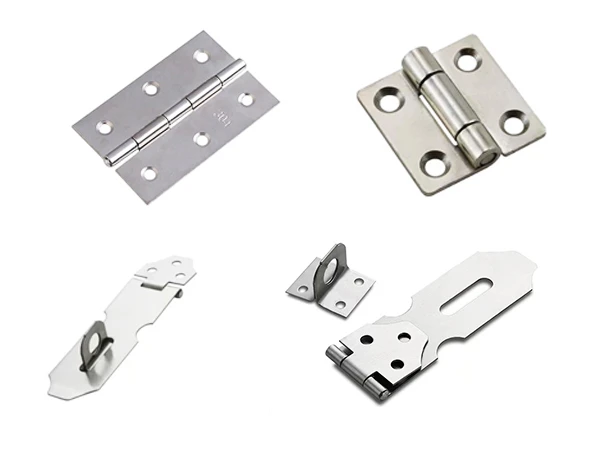
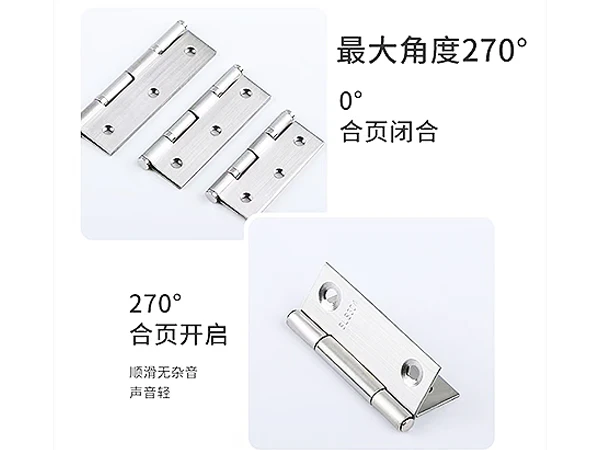
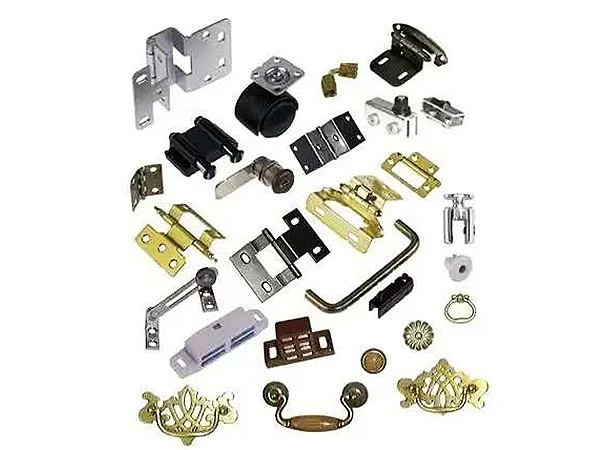
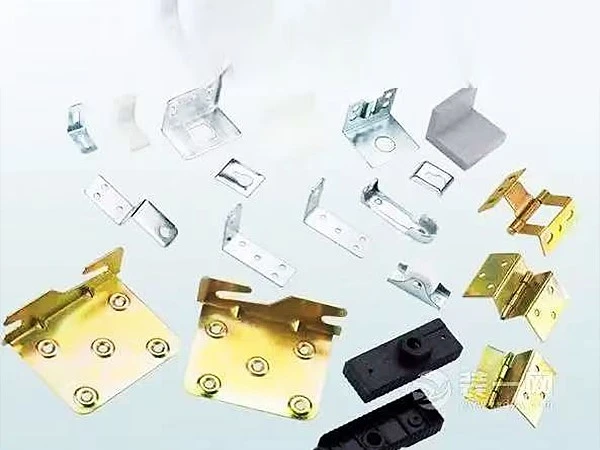
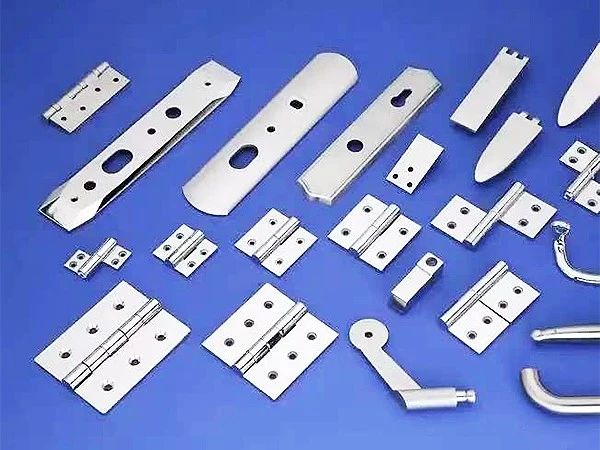
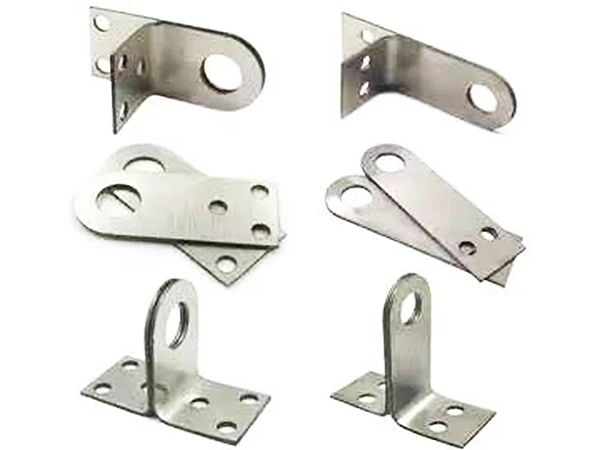
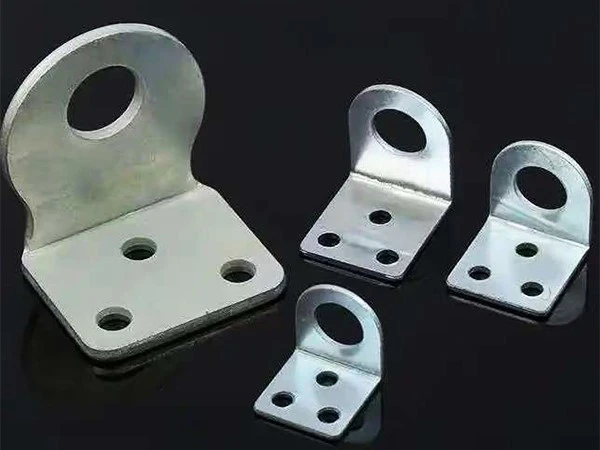
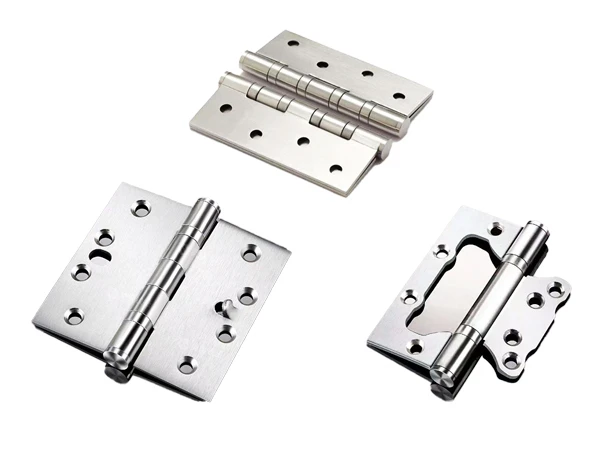
Our metal hinges can be opened and closed at a maximum Angle of 270° for smooth installation, no noise and low sound
• Efficiency Hinges are typically composed of several small parts, such as leaves, pins, and rivets. Through metal stamping, large quantities of precise parts can be produced in a short time, meeting the demands of mass production.
• Precision and Consistency Metal stamping ensures that each component of the hinge is uniform in size, with accurate shapes, guaranteeing high performance and long-lasting durability.
• Cost Savings Compared to other manufacturing methods (such as casting or milling), stamping is more economical, especially for large-scale production. It reduces material waste and lowers labor and processing costs.
• Complex Shape Manufacturing Hinge designs often involve complex shapes and structures, such as bent or deep-drawn parts. Precision stamping can easily achieve these complex shapes while ensuring the strength and durability of the parts.
• Surface Treatment Stamped hinge parts can undergo surface treatments (such as electroplating, spraying, etc.) to improve corrosion resistance, wear resistance, and appearance, enhancing the product's market competitiveness.
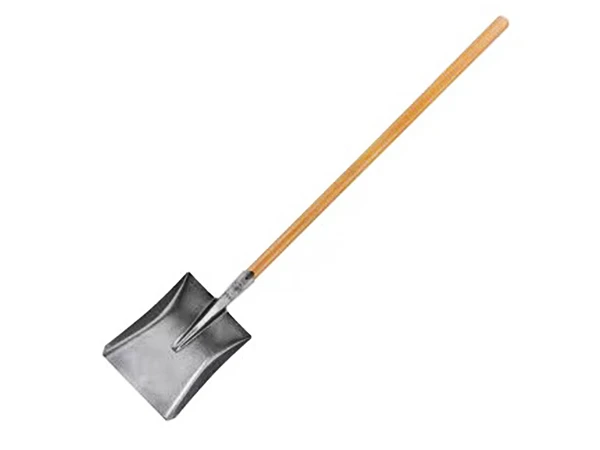
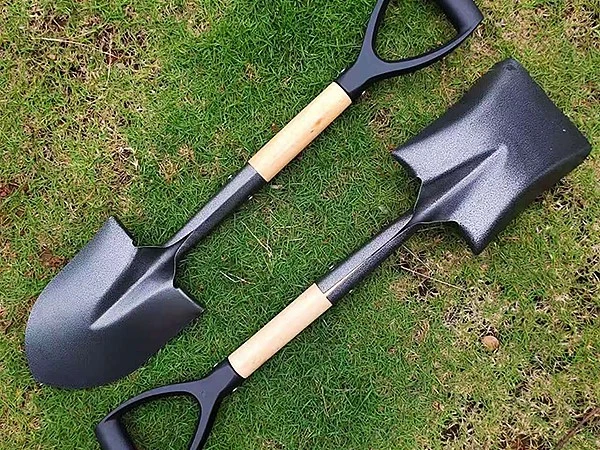
Soil Cultivation Tools(spade, shovel and hoe)

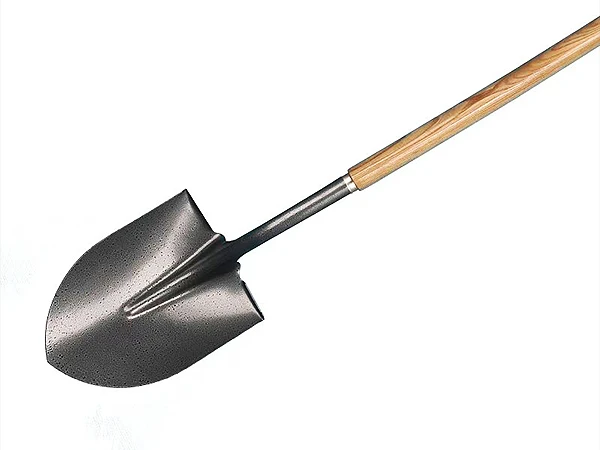

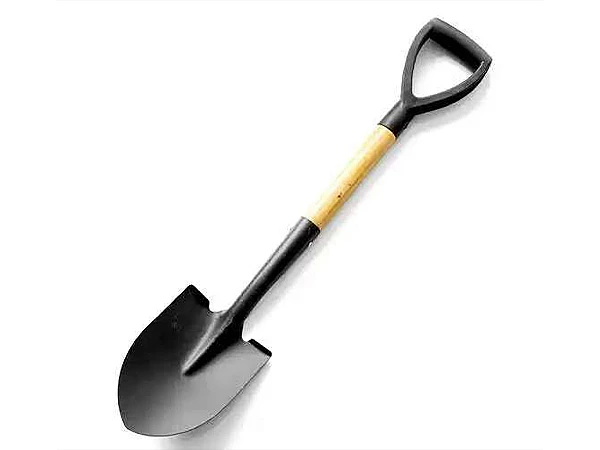


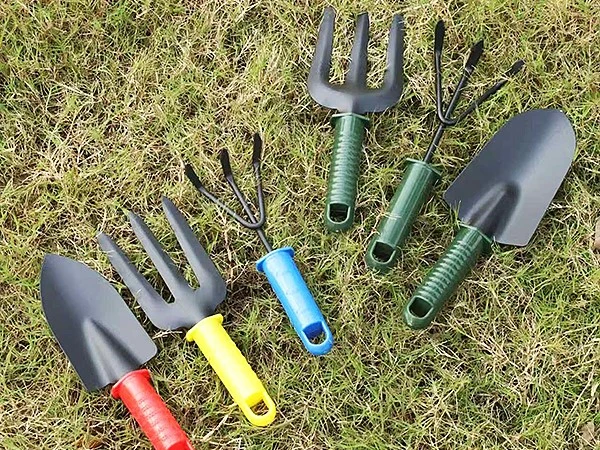

Other Product Cases
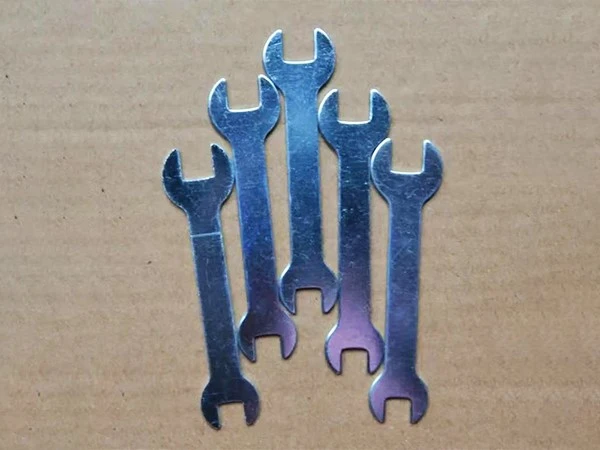
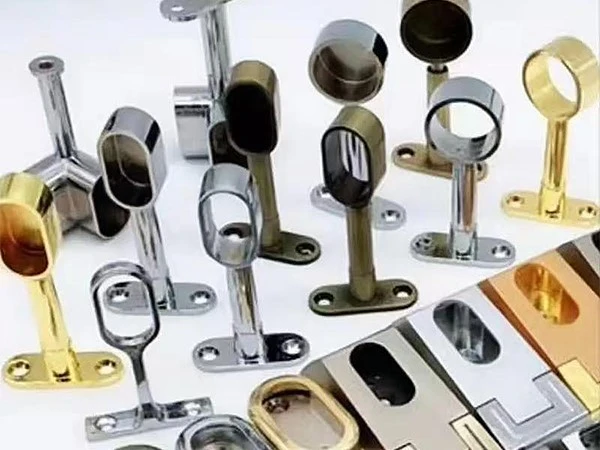
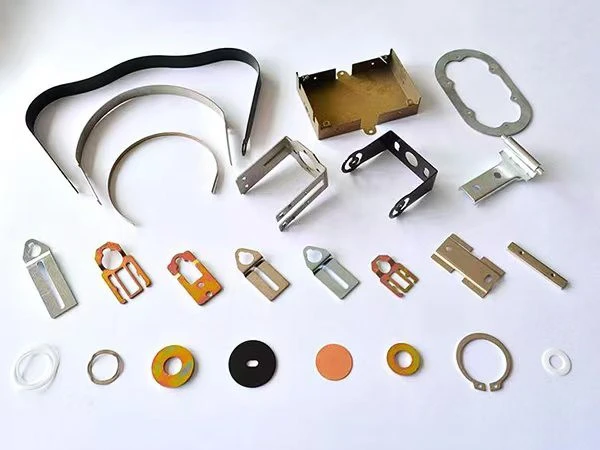
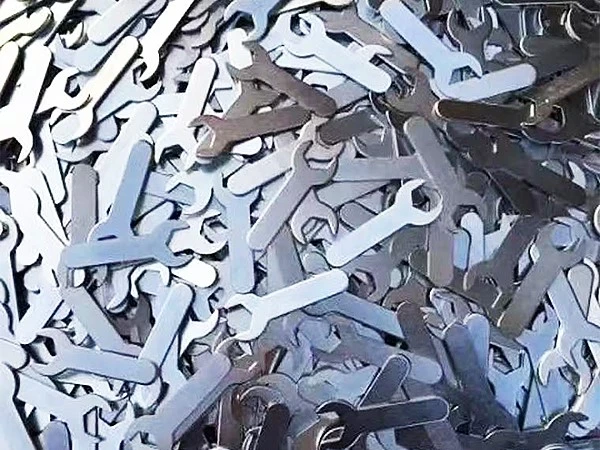
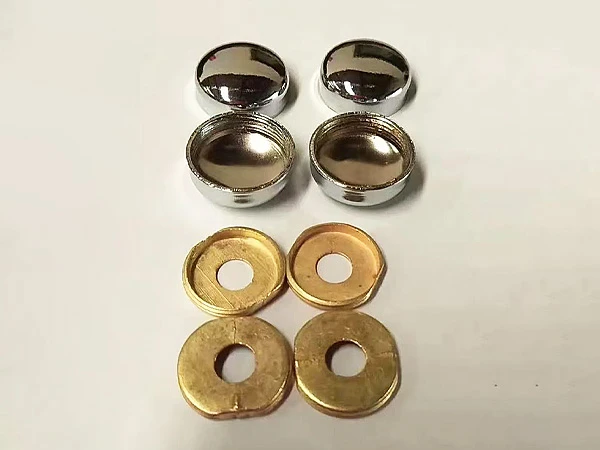
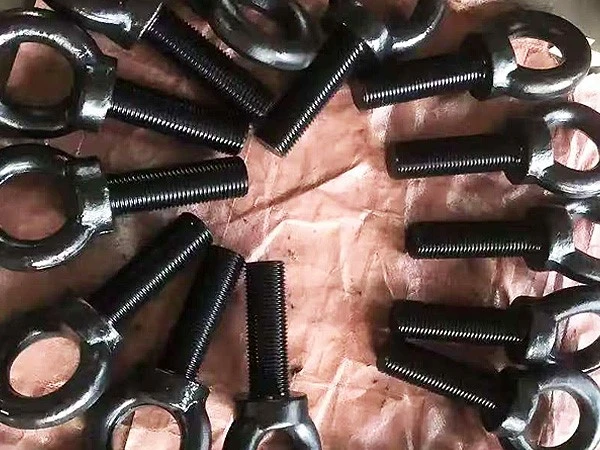
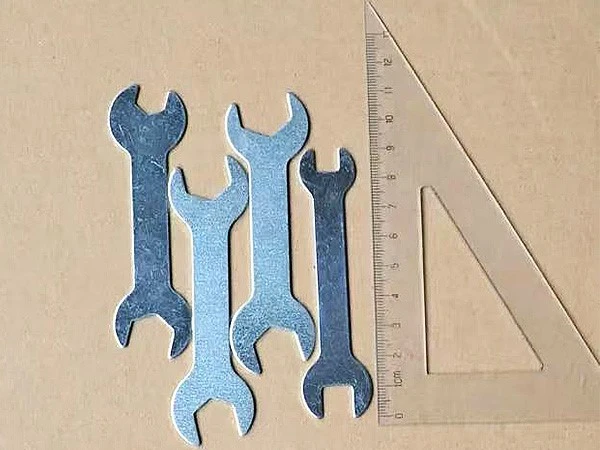
Customized Service
Custom metal stamping products tailored specifically to meet your unique requirements can be provided at Xinmandi. With advanced stamping processes and stringent quality control measures in place, we deliver efficient, accurate, reliable metal components that will stand out on the market.
Process
Materials Prep
Select appropriate metal materials (such as stainless steel, aluminum, copper and carbon steel ) in terms of thickness, hardness and other properties in order to maximize processing success.
Mold Design and Manufacture
Precision mold design is of utmost importance in stamping processes, as its accuracy directly impacts product quality and production efficiency.
Place the metal sheet into the mold and apply pressure using a stamping machine (such as a mechanical or hydraulic press) to achieve the required shape and size. Common stamping operations include:
Cutting: Using the mold to cut the material into specific shapes, such as circles, rectangles, etc.
Bending: Applying pressure to bend the material, changing its angle or shape.
Drawing: Stretching the material into cup-shaped, cylindrical, or other shapes.
Extrusion: Forcing the material through the mold to form complex cross-sectional parts.
Punching: Creating holes or hollow structures by punching the metal sheet.
Trimming: Removing excess metal to achieve the desired product shape.
Post-Processing and Surface Treatment
Stamped metal parts require further processing such as deburring, polishing, spraying and electroplating in order to improve appearance and functionality.
Quality Control Whilst stringent quality management procedures are put in place to guarantee compliance with design specifications, accuracy in moulds, materials and operational processes must also be monitored to ensure an exceptional final product.
Common types of metal stamping processes

Single Stamping
A single operation completes one process, suitable for small batches or simple-shaped parts.
Progressive Stamping
Multiple processes are completed continuously on a single stamping machine, suitable for mass production, significantly improving production efficiency.
Deep Drawing
The material is drawn deeper through a die, commonly used to manufacture deep grooves or cup-shaped parts, widely applied in the automotive and home appliance industries.
Precision Stamping
High-precision stamping is performed using precise dies and equipment, suitable for parts with strict size and shape requirements.
As a professional metal stamping factory, our processes have the following advantages:
Efficiency
Through advanced equipment and automated production lines, we achieve high-speed, large-scale production, significantly improving production efficiency and shortening delivery times.
01
Cost-Effective
With a one-time investment in molds, the unit cost decreases as production volume increases, helping customers save on manufacturing costs.
02
High Precision
We use precision equipment and molds to ensure accurate part dimensions and excellent surface quality, perfectly meeting design requirements.
03
Wide Applicability
We can process various metal materials to meet the needs of industries such as electronics, automotive, home appliances, etc., providing customized solutions.
04