


In the competitive world of modern ranching and agricultural supply, the integrity of your containment system is non-negotiable. Whether you are managing a commercial feedlot or distributing equipment to regional retailers, choosing the right livestock panels is a decision that impacts both animal welfare and long-term operational costs.
This comprehensive guide explores the technical specifications, strategic advantages, and maintenance protocols of high-quality livestock panels, designed specifically for professional volume buyers and ranch managers.
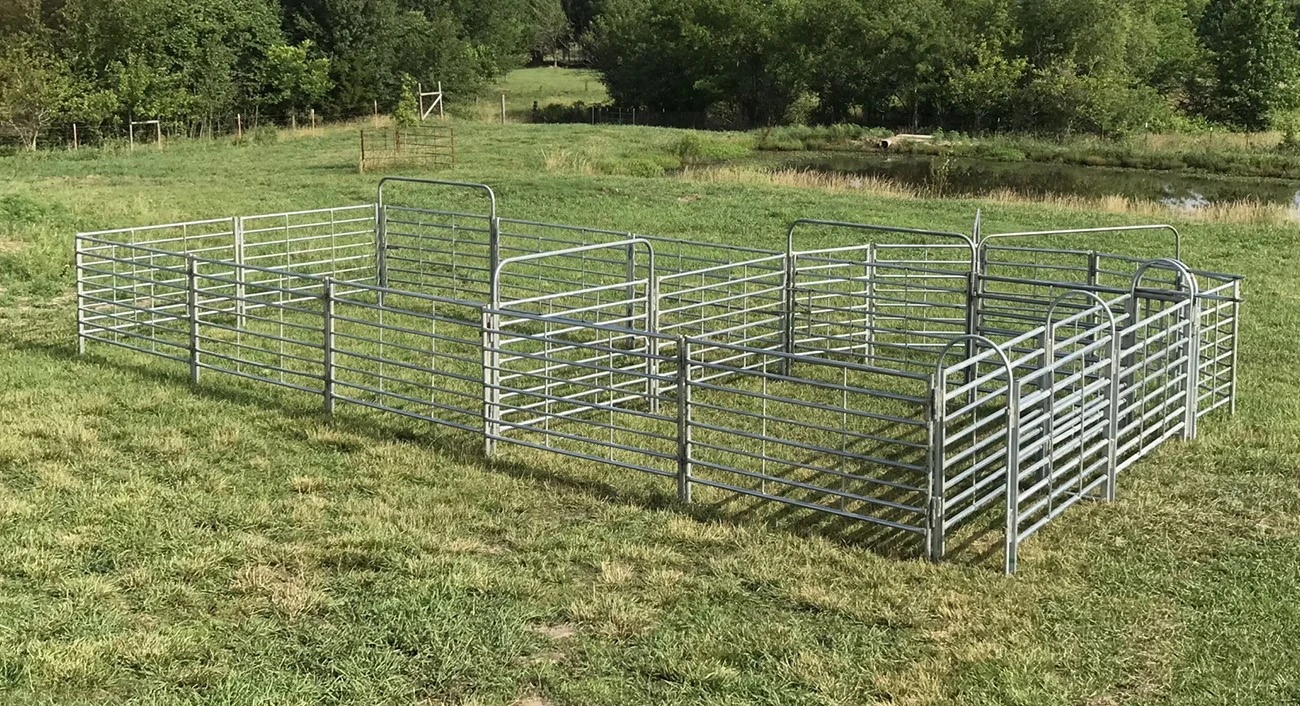
1. What are Livestock Panels? (Product Overview)
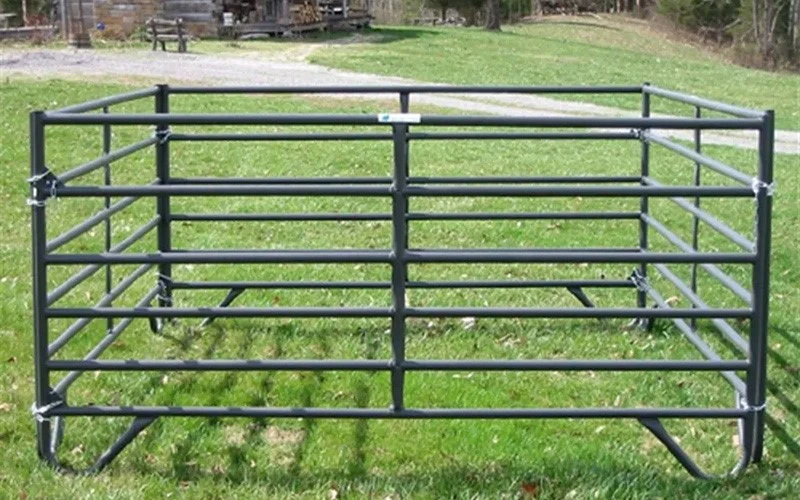
Livestock panels, often referred to as cattle panels, corral panels, or stockade panels, are heavy-duty modular fencing sections. Unlike traditional wire fencing, these are rigid structures typically manufactured from high-tensile steel tubing or thick-gauge galvanized wire.
For B2B buyers, the "standard" isn't just about size; it's about load-bearing capacity and tensile strength.
Key Specifications for Commercial Use:
- Material: High-tensile carbon steel or pre-galvanized/hot-dipped galvanized steel.
- Common Lengths: 10ft, 12ft, and 16ft (customizable for container loading).
- Tube Profiles: Round (best for flexibility), Square (best for impact resistance), or Oval (maximum strength-to-weight ratio).
2. Types of Livestock Panels: Choosing the Right Match
A common pain point for bulk buyers is "mismatched inventory"-ordering panels that are too light for bulls or too gapped for goats.
|
Panel Type |
Target Livestock |
Key Features |
|
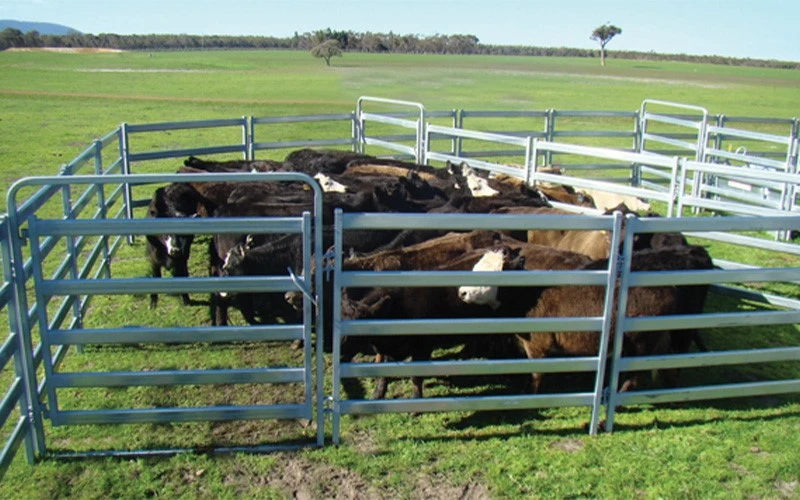
Bulls, Cattle, Bison |
1.6mm - 2.0mm wall thickness; 6-bar configurations; high impact resistance. |
|
|
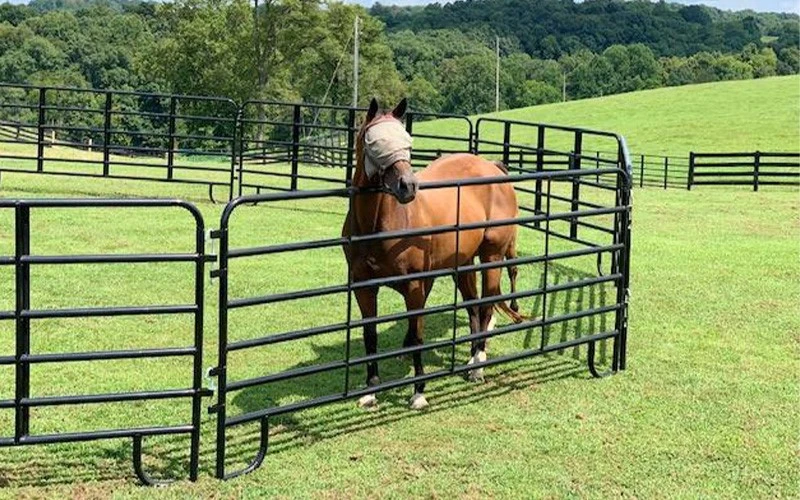
Horses, Foals |
Narrow mesh or "Smooth Rail" design to prevent hooves from getting caught. |
|
|
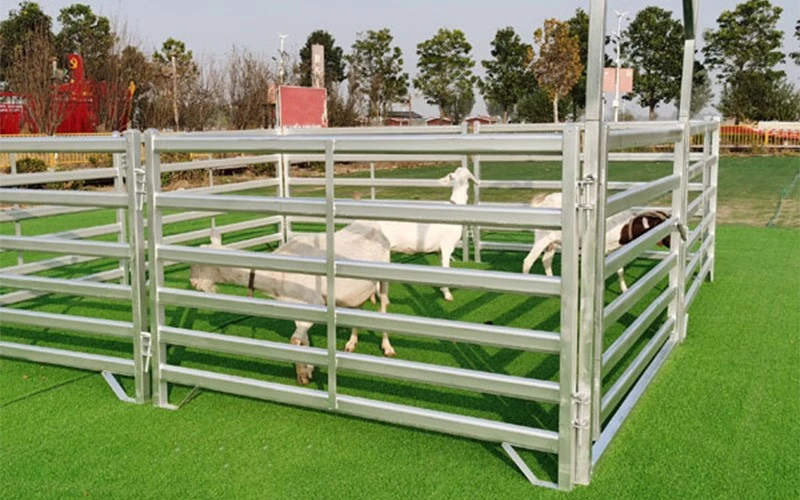
Sheep, Goats, Hogs |
Graduated spacing (smaller holes at the bottom) to prevent "head-stuck" incidents. |
|
|
Temporary Containment |
Lightweight with pin-and-clip connectors for rapid deployment at auctions or events. |
3. Why Quality Matters: The B2B Advantage
For large-scale operations, the "cheapest" panel often becomes the most expensive due to premature rust and livestock injury.
Superior Corrosion Resistance
Our panels utilize Hot-Dipped Galvanization (HDG) after welding. This ensures that every weld joint-the most vulnerable spot for rust-is fully sealed with a zinc coating of at least $80g/m^2$ to $275g/m^2$.
Structural Integrity & Animal Safety
- 360° Full Welding: Unlike spot welding, full-circumference welds prevent bars from snapping under the pressure of a 1,500lb animal.
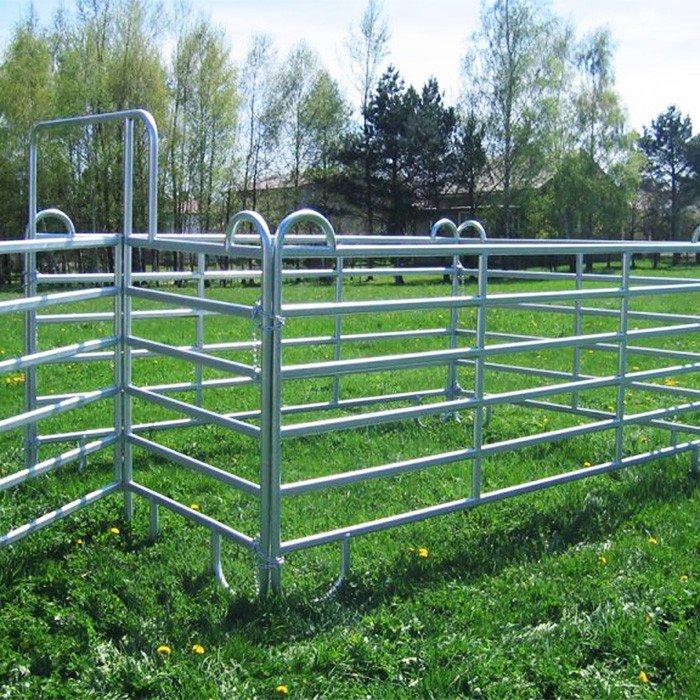
- Square Corners vs. Round Tops: We offer "J-Leg" or "Loop Leg" designs to prevent the panels from sinking into soft ground, a major concern for outdoor feedlots.
Limitations to Consider !!!
- Fixed Size: Unlike roll fencing, panels come in fixed sizes which can be less suitable for very irregular terrain.
- Weight and Bulk for Transport: Although lighter than heavy corral panels, cattle panels can still be bulky to handle, especially when moving large numbers.
- Cost: Initial investment in panels can be higher than some wire roll fencing but is often offset by longevity and decreased maintenance.
4. Key Applications in Large-Scale Ranching
Perimeter Fencing: Permanent boundaries for large acreages.
Handling Systems: Forcing pens, sweep tubs, and working alleys where animal pressure is highest.
Rotational Grazing: Using portable panels to manage pasture health and maximize forage yield.
Emergency Containment: Rapidly deployable kits for disease isolation or transport loading.
5. How to Install Cattle Panels Successfully
1. Support Posts to Choose:
Since panels depend on anchoring, it is important to have posts that are well spaced and strong. Posts include:
Steel T-posts or hog Rings (e.g. T-post clips, hog rings).
Treated wood posts and corners for gates
Pipe posts to maximize strength in high-pressure areas
2. The correct panel setup:
Use bracing if the terrain is uneven or place panels on a level surface.
Attach panels tightly to posts in order to prevent them from sagging.
If necessary, use dropper rods and braces to maintain the panel shape.
3. Gates and Accessories:
Use matching gates, such as the Mesh wire gate to create a seamless integration.
For hinge support, use tube gate clamps and gate hardware that is strong.
Add electric nets or energizers for added security.
6. Maintenance and Longevity: Protecting Your Investment
To maximize the ROI of a bulk purchase, follow these professional maintenance protocols:
- Annual Connection Check: Inspect pin connectors and hinges for wear. Loose connections lead to "rattle stress," which can fatigue the metal.
- Zinc Touch-ups: If panels are scratched during heavy handling, use a 95% zinc-rich cold galvanizing spray to prevent localized oxidation.
- Ground Clearance: Ensure the bottom rail is slightly above the mud line to prevent constant moisture contact, which accelerates base corrosion.
7. Sourcing Insights: Addressing Buyer Pain Points
When sourcing from overseas or large-scale manufacturers, B2B buyers should focus on:
Loading Capacity: How many pieces fit in a 40HQ container? (Typically 200–400 pieces depending on weight).
Lead Times: Seasonal demand spikes in Spring/Fall. Secure your inventory 3–4 months in advance.
Customization: Can the supplier adjust the rail count or gauge to meet specific regional market demands?
8. Frequently Asked Questions
Looking for a Reliable Livestock Panel Partner?
At [Shandong Xinmandi International Trade Co., Ltd.], we specialize in high-volume manufacturing of ISO-certified livestock panels that meet North American and Australian ranching standards. We understand that for you, it's not just a fence-it's the safety of your assets and the reputation of your business.
Would you like a customized quote or a technical data sheet for our Heavy-Duty Cattle Series?
[Contact Our Sales Team Today] | [Request a Bulk Pricing Catalog]